

Custom Dental Crowns in Rochester, NY for Strength, Protection, and Natural Aesthetics
Designed for durability, full function and aesthetics, crowns protect your existing tooth structure, integrate with and enable implants, and restore the ability to chew and speak comfortably and smile confidently. At Contemporary Dentistry, dental crowns are used to restore damaged or weakened teeth while maintaining a natural look and feel.
As part of our tooth repair & restoration services, crowns are customized to blend seamlessly with your smile.
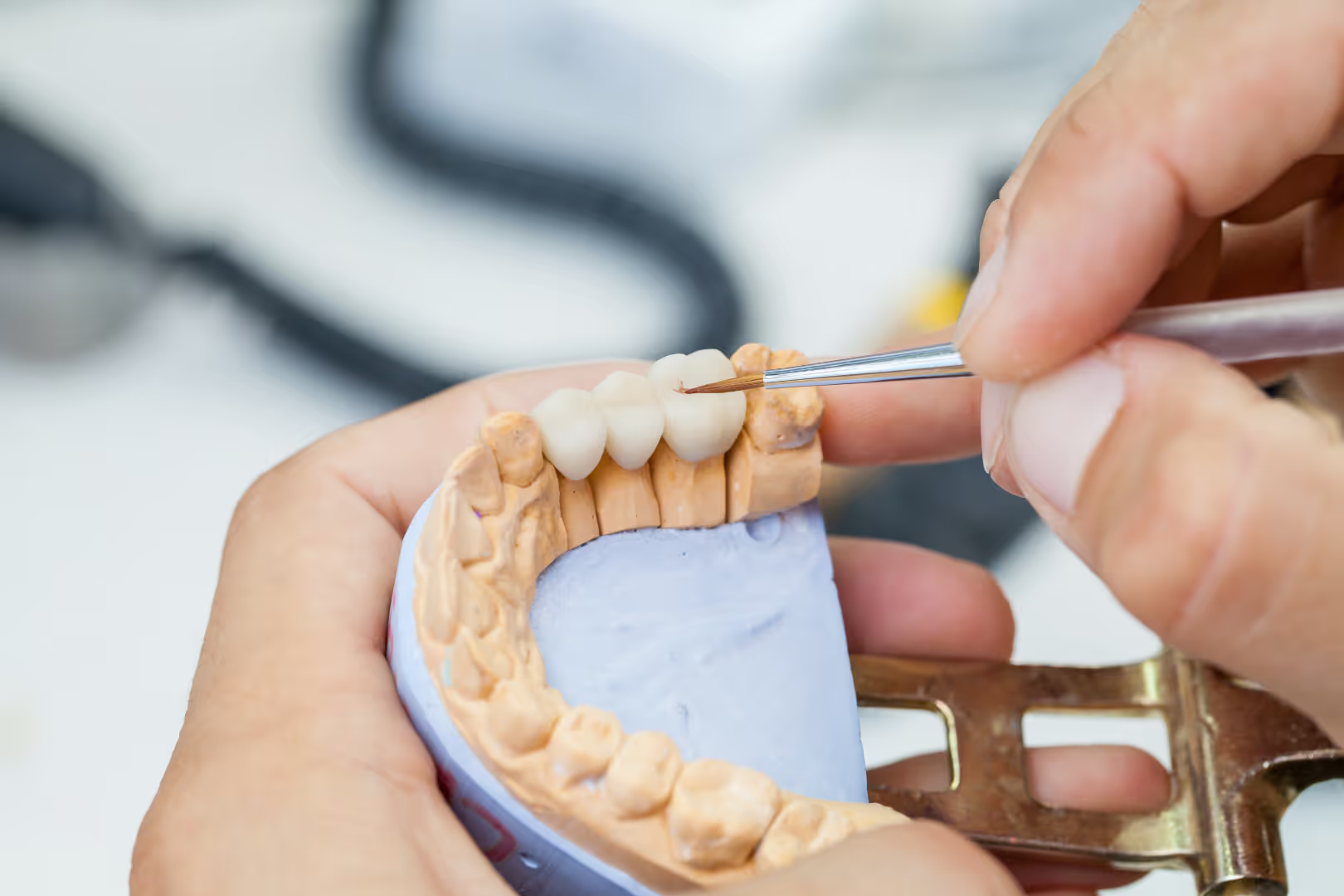

What Is a Dental Crown?
A dental crown is a custom-made biocompatible porcelain/ceramic cap that covers a natural tooth to restore its shape, strength, and appearance or covers the implant post and abutment to replace the shape, strength and appearance of an extracted or lost natural tooth. It is typically recommended when a tooth cannot be repaired with a simple filling or when the tooth has been lost and an replaced by an implant.
Natural tooth crowns are often used to:
- Protect weakened or cracked teeth
- Restore teeth after large cavities or damage
- Cover and support a tooth after root canal treatment
- Improve the appearance of misshapen or discolored teeth
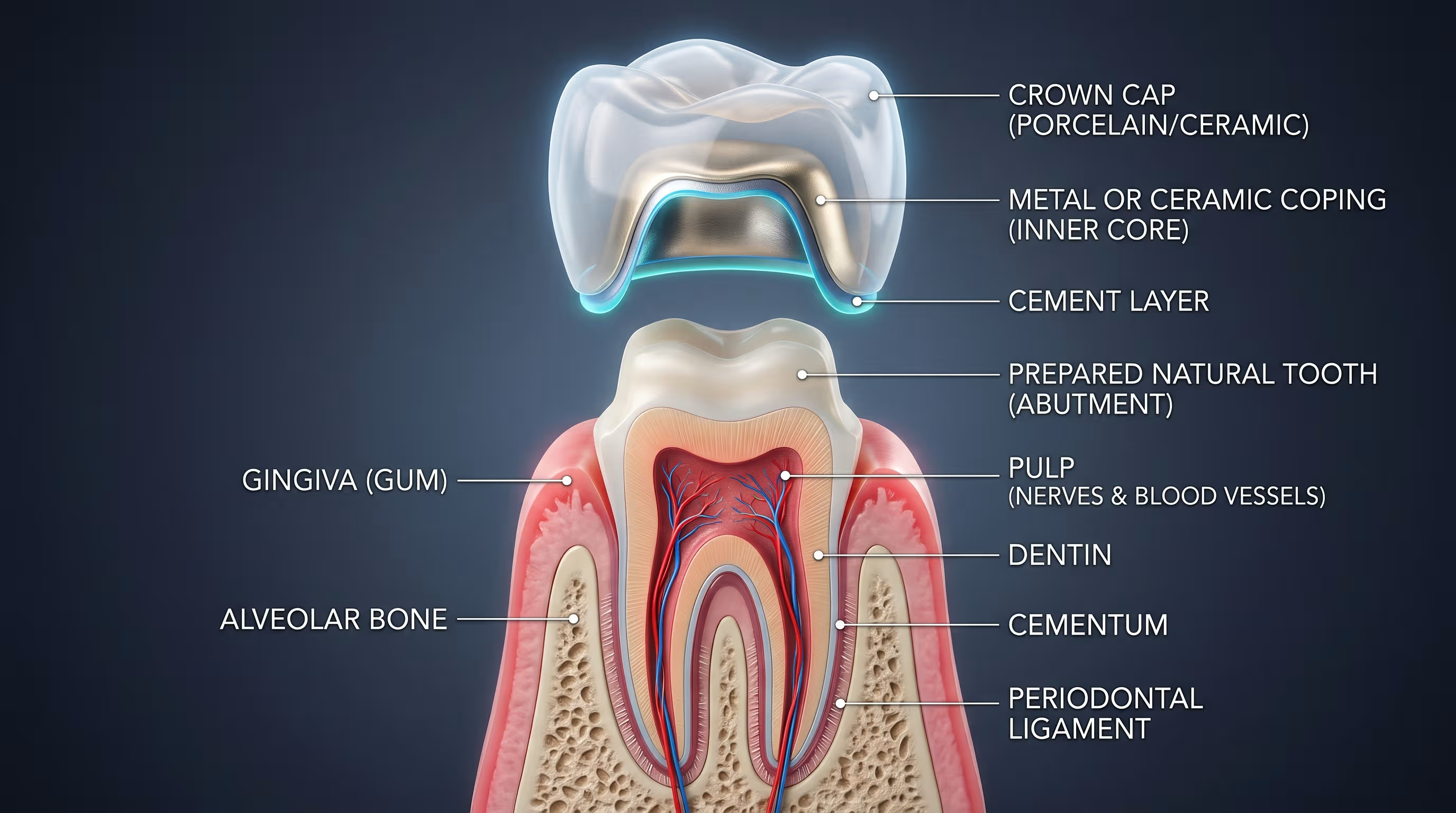
Implant crowns are often used to:
- Restore the original function after teeth have been lost
- Restore the original tooth appearance
- Complete treatments like dental implants
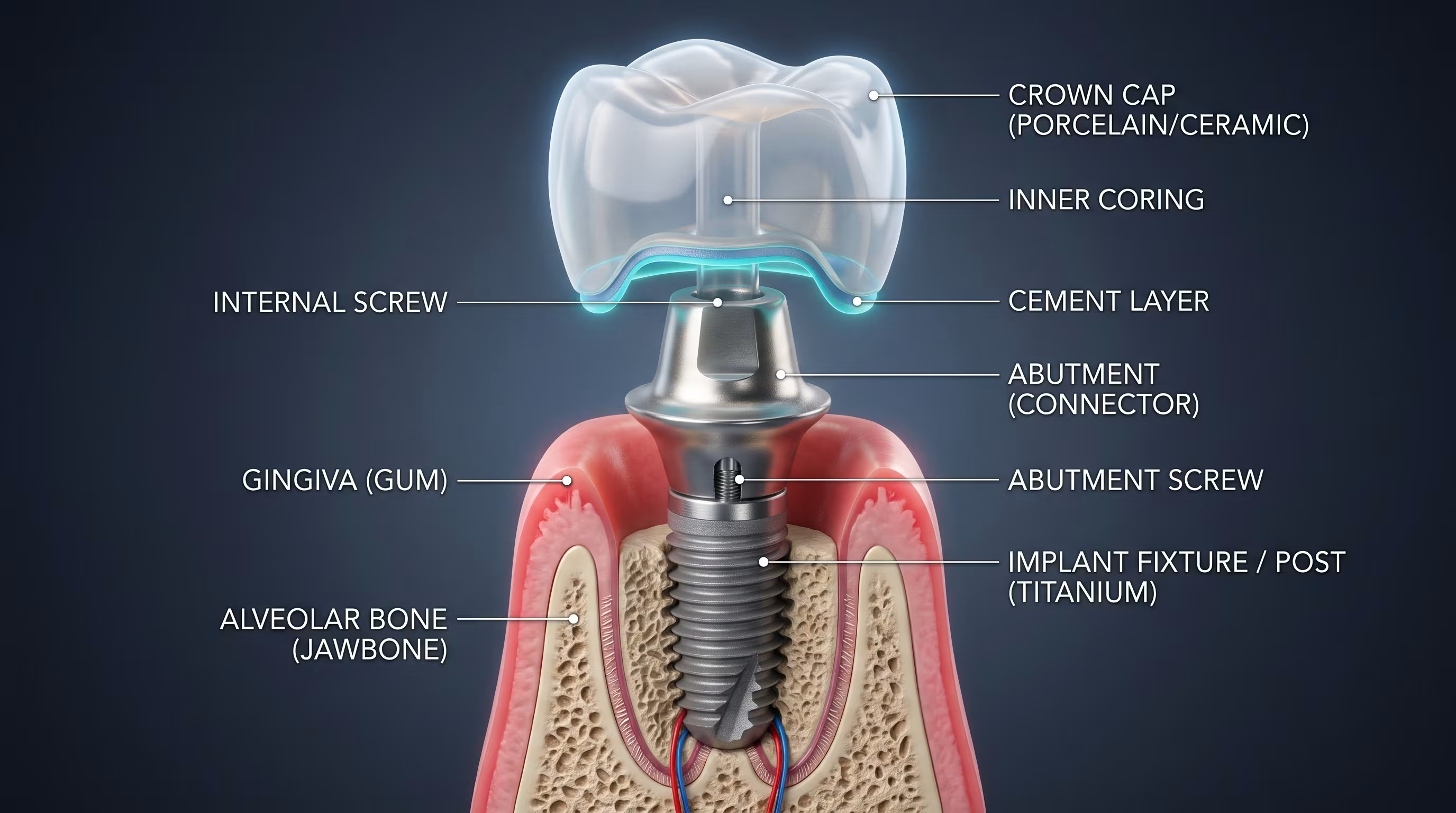
Each crown is designed to match your natural teeth for a balanced, functional result.
The Dental Crown Process
Getting a dental crown involves a precise, step-by-step approach to ensure long-lasting results.
Your treatment typically includes:
- A comprehensive exam & checkup
- Preparation of the tooth to support the crown
- Digital impressions for accurate design
- Placement of a custom-fitted crown
- Final adjustments for comfort and bite alignment
Our use of modern technology ensures a more efficient and comfortable experience.
Benefits of Dental Crowns
Crowns offer both functional and aesthetic advantages, making them a reliable restorative solution.
Benefits include:
- Strengthening and protecting damaged teeth
- Restoring full chewing function
- Natural appearance that blends with your smile
- Long-lasting durability with proper care
- Prevention of further damage or decay
In cases where multiple teeth are affected, crowns may be combined with treatments like dental bridges for comprehensive restoration.
A Biologic and Conservative Approach
Our crown treatments are guided by a holistic philosophy that prioritizes your overall health. We use high-quality, biocompatible materials and focus on preserving as much natural tooth structure as possible.
This approach ensures:
- Safe, body-compatible restorations
- Long-term comfort and stability
- A natural look and feel
- Support for your overall wellness
Our goal is to deliver results that are both functional and health-conscious.
Caring for Your Dental Crown
Maintaining your crown is similar to caring for your natural teeth and is essential for long-term success.
We recommend:
- Regular dental cleanings and exams
- Daily brushing and flossing
- Avoiding excessive pressure on the crowned tooth
- Addressing habits like grinding if necessary
With proper care, crowns can last many years.
Frequently Asked Questions About Dental Crowns Answered By Our Expert Dentists


FAQs
How do I know I need a dental crown?
There is a number of clinical indications for which a dental crown would be the most optimal solution. Obviously, if you have had a dental implant, it needs to be capped by a dental crown. We would discuss the specifics of this at the time of planning the implant surgery. Aside from dental implants, some more typical indications would be a severely damaged tooth, beyond what a simple filling could repair. This could be large cracks and cavities, post-root-canal treatments, misshapen or discolored teeth, although in the latter case other, less invasive methods may be available, too. Depending on the extent and location of damage or treated area, a partial crown could be a more practical choice. These crowns, also sometimes called onlays, cover only a part of the tooth, allowing to retain much of the tooth's natural shape.
Every situation is different and would require our expert dentists Dr. Anna Belous or Dr. Adriana Palacio to carefully examine you, asses the digital X-Rays and then make an informed diagnosis. We would then work with you to come up with a treatment plan that suits your needs, your goals and your financial situation.
How long do dental crowns last?
Dental crowns can last 10–15 years or longer with proper care and regular dental visits. The actual life-span of a crown depends on many factors. Some you can control and others you cannot. The first factor that you can definitely control is that you want this procedure performed by a dentist who specializes in restorations and has done thousands of similar procedures throughout their career. At our office you would be in safe and experienced hands of Dr. Anna Belous and Dr. Adriana Palacio - the sought-after expert restorative dentists in the Rochester, NY area.
Another factor that is within your control is following the recommended treatment plan, which would be designed with long-term clinical success objectives in mind. Both doctors practice with the clinical outcomes philosophy in mind. So, choosing the recommended plan is a sure way to secure long-lasting results.
Yet another factor that is in your control is the post-treatment self-care. If you brush and floss regularly, follow through with your regular dental cleanings and exam hygiene appointments, chew mindfully, avoid excessive pressure on the crown tooth and address habits like grinding and clenching, which we can also help you do with dental retainers and night-guards, then you can definitely extend the life of your dental crown by many years.
With all that said, some factors affecting the longevity of your dental crown may not be in your control. It's things like the exact shape and location of the crown, how much mechanical stress it naturally needs to sustain, the integrity of the tooth to which the crown is bonded and other factors. Again, we will help you make the right decision, with all things being considered.
How are crowns made? What materials are used? Are they biocompatible? Do they yield natural-looking results?
All crowns are custom-designed to match the color, shape, and size of your natural teeth. We work with carefully hand-picked, state-of-the-art dental labs that use the most innovative manufacturing technologies. Yes, it may take a couple of weeks of waiting, as opposed to going with those dental offices offering same-day, in-house manufactured crowns, but with those you often get what you pay for... or less. We, on the other hand, rely on dental labs that have specialized, cutting-edge machinery that would hardly fit in our office, even if we tried. All crowns are made from biocompatible materials. The materials used and the manufacturing process may very, depending on the type of crown.
Some are porcelain-fused-to-metal (PFM) crowns, which feature a non-toxic metal inner core or thimble covered with a porcelain (ceramic) outer layer. They are extremely strong and durable, especially under heavy bite forces, making them suitable for back molars and pre-molars. Aesthetically, they are sometimes a bit more opaque. Others are all-ceramic (sometimes called all-porcelain, which is a specific type of ceramic) crowns, made entirely of zirconia, lithium disilicate / Emax (for high translucency) or other similar material. All of these materials are non-metal and non-toxic. These crowns are very strong, although they can be more brittle, depending on the exact material formulation. That is why Dr. Anna Belous and Dr. Adriana Palacio work with expert dental lab technicians to formulate the exact material depending on the location of the crown and its shape, assessing the predicted mechanical forces and the desired aesthetics. From the aesthetic perspective, the location and thickness of the crown and the tooth underneath it are assessed to formulate the material that will yield perfect translucency, allowing natural light to pass through for more lifelike appearance. This is ideal for front tooth restorations.
Is getting a crown painful?
Compassion and patient comfort is our top priority. The procedure is typically comfortable, and we offer local anesthesia and sedation dentistry for patients who prefer a more relaxed experience. We also understand that comfort is not just about pain-free treatment, and we offer a slew of amenities to ease your anxieties and help you relax, ranging from spa-like office atmosphere, to soothing ambient lighting, to ambient music and personalized audio and video entertainment, to noise cancelling and light dimming devices, to warm blankets and comforting pillows.
When is a crown better than a filling?
Neither treatment is inherently better or worse than the other. They are simply indicated for different clinical circumstances and this is why you have the experts - Dr. Anna Belous and Dr. Adriana Palacio - to carefully evaluate your particular case and make the best long-term clinical outcome determination and recommendation. Once the recommendation is made, we will work with you to come up with the most reasonable treatment plan. With all that said, generally speaking, a crown may be recommended when a tooth is too damaged or weakened to be restored with a filling alone. Fillings are carefully considered, however, as they require less treatment time and are certainly less costly than crowns.
Will I be able to afford a crown, if I need one?
Crowns are very commonly recommended treatments. They do often require considerable time in the treatment chair and there is usually a dental lab and a manufacturing process involved. So, naturally, cost is a consideration. Crowns are typically classified as major restorative care by most dental insurance plans, and as such are covered at certain percentage levels, ranging around 50-80% of the cost, after you meet your annual deductible. Cosmetic exclusions may apply, if a crown does not address medically necessary restorations from damage, decay or a weakened tooth. Some waiting periods may also apply for new plan enrollments. Also, many plans have annual maximum coverage caps, meaning once you reach that limit, you pay additional costs out of pocket, while Medicaid and Medicare do not typically cover routine dental crowns.
So, because every insurance is different and nuanced, we encourage you to talk to our amazing patient experience team, who will be happy to assist you with financially planning your treatment. We accept a broad range of insurances and can submit them to quickly verify your eligibility at the time of treatment planning, so that there are no surprises. We also follow our "access for all" philosophy that is rooted in believing that quality dental care should be available to everyone. That is why we go beyond insurance coverage and are often able to accommodate various payment plans with no and low-interest financing, for those that qualify.
We combine advanced dentistry with a holistic, biologic approach that focuses on your overall health—not just your teeth.
Schedule Your Crown Consultation
Restore and protect your smile with custom dental crowns. Call (585) 244-3337 or visit our contact page to book your appointment today.